
Governance
Veteran Health Care Leader Reflects on Her Experience With Boards
Michelle Hood draws on four decades of leadership to explore how effective governance, trust, and board engagement shape resilient health care organizations in a rapidly changing environment
Health care governance boards exist in a wide variety of shapes, sizes and missions. They include hospitals and health systems; nonprofit, for-profit and public; subsidiary boards; advisory; governing; foundation; and fiduciary boards. The list goes on.
The same is true with their range of duties. Organizational models differ, with some boards deeply engaged in long-term planning, while others focused more on performance, quality or financial health. Nonprofit hospital boards tend to keep their eye on providing community benefit, fulfilling their mission and answering to the public, while for-profit boards are also responsible to shareholders for financial performance.
A Career Shaped by Board Experience
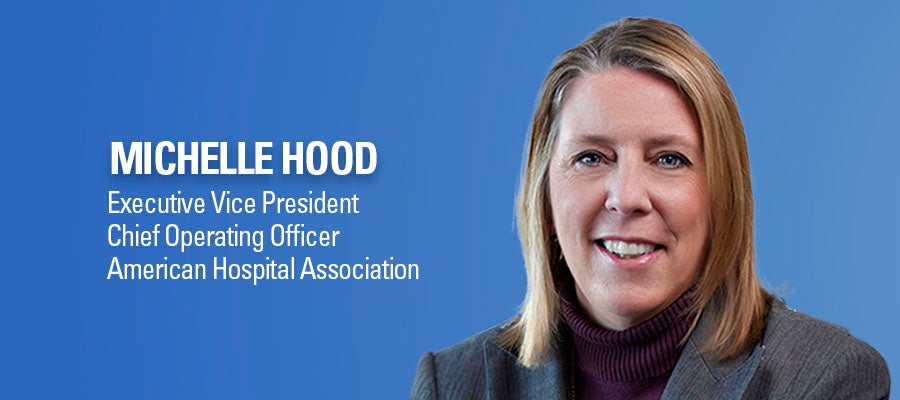
Even with all this diversity, there are few permutations of governance boards that Michelle Hood, the American Hospital Association’s executive vice president and chief operating officer, hasn’t encountered at some point during her 40-odd year career as a health care leader.
Since 2020, Hood has brought vast experience to the position, including 14 years as the president and CEO of Northern Light Health (formerly East Maine Healthcare Systems), an integrated health care system, comprised of nine member hospitals with 987 licensed acute care beds, multiple skilled and long term care facilities and a home care/hospice program serving Mainers across the state.
Those years, combined with an earlier stretch guiding a regional health system in Montana and many years of service on state hospital associations and related committees and boards, gave Hood an extensive education on board dynamics and navigating internal politics.
Balancing Authority and Responsibility
Those skills were put to the test early on in Maine, when as CEO, Hood acted to move all fiscal authority away from Northern Light’s subsidiary boards and elevate it to the systemwide level.
“That took a lot of finesse to convince the individual hospital board members that they still had significant responsibilities while they didn’t have fiduciary responsibility,” Hood recalls. “But as the system became more integrated, it was really important that the system board have that authority.”
Centralized fiduciary oversight mitigates risks of liability, standardizes legal compliance, ensures prudent resource allocation and protects the overall charitable mission of the system.
Hood is a firm believer in the importance of building trust and rapport between CEOs and board members. It proved invaluable as Northern Light expanded over the years, such as when the secular health system acquired a Catholic hospital and needed to obtain canonical approval and the Vatican’s approval.
“Every acquisition we did required the board to be really engaged because every acquisition comes with risk. Most of the hospitals that came into the system while I was the CEO weren’t in that great shape financially. So there had to be some trust around that,” Hood notes.
What Makes a Good Board Member
Her years of working collaboratively with various types of boards have convinced Hood of one thing: “A good board member is a good board member.” They share characteristics regardless of the type of service involved. A good board member embraces continuing education, is able to work effectively with peers who represent a wide range of backgrounds and skill sets and, above all, has a strong interest in health care beyond just the delivery of clinical services.
“You have to have a passion and a strong belief in the mission of the organization, because it’s time-consuming and it’s not just showing up at the meetings,” Hood states, noting that social engagements and civic activities such as commencements can also demand significant personal time.
From Health System CEO to Association Leader
For a health care leader with Hood’s wide experience, the stretch from hospital system CEO to a top position with one of the nation’s leading hospital associations was not as wide a gulf as one might expect.
For one thing, she had served on the AHA’s Board of Trustees for three years before joining the AHA full time, so the board’s internal workings were already familiar, even if its operating style was somewhat different than that of a health care delivery organization.
Different how? In Hood’s view, “I think one of the challenges we have at the association is we’ve got such a diverse membership that it’s difficult to please everybody all the time. An association board recognizes there’s not going to be that answer that is 100% approved and agreed upon by every member, so that’s probably the biggest difference.”
One challenge that nearly every board faces is the recruitment of not just new members, but the right new members: people with the skills, temperament and outlook to contribute effectively to the guidance of their organization in today’s rapidly changing health care climate.
The evolution of the state of health care governance structures and practices to keep up with the pace of change is captured in the AHA’s 2025 National Governance Report, which presents a comprehensive picture of hospital and health system boards across the country in areas including composition, performance oversight and selection.
Meanwhile, Hood has her own thoughts about what challenges today’s board members at any level need to be prepared for. These include continuing financial pressures on the field, workforce issues, heavier demands on health care resources that come with an aging population and growing pressures on the Medicare trust fund.
“I don’t think those challenges are going to lessen in any respect,” she says. “So the first question I’d ask [a potential new member] is, ‘Are you committed to what the organization is trying to accomplish? And how do you think your sitting on the board can make a difference? ”
Governing in a Time of Change
Hood notes that governance has become more complicated as hospitals, health systems and the overall health care environment undergo significant challenges. She emphasized the importance for all board members to be fully oriented and understand details about the board’s decision-making authority, liability, accountability, fiduciary duties and other components of the organization’s governance composition. Hood stressed that ongoing education about the ever-evolving health care environment is critical for board members to fulfil their responsibility to govern through setting policy and direction for the organization while supporting management to execute the board’s adopted strategy, mission and vision.
AHA provides resources for trustees and the staff that support them. Go to www.aha.org/trustees for more information.